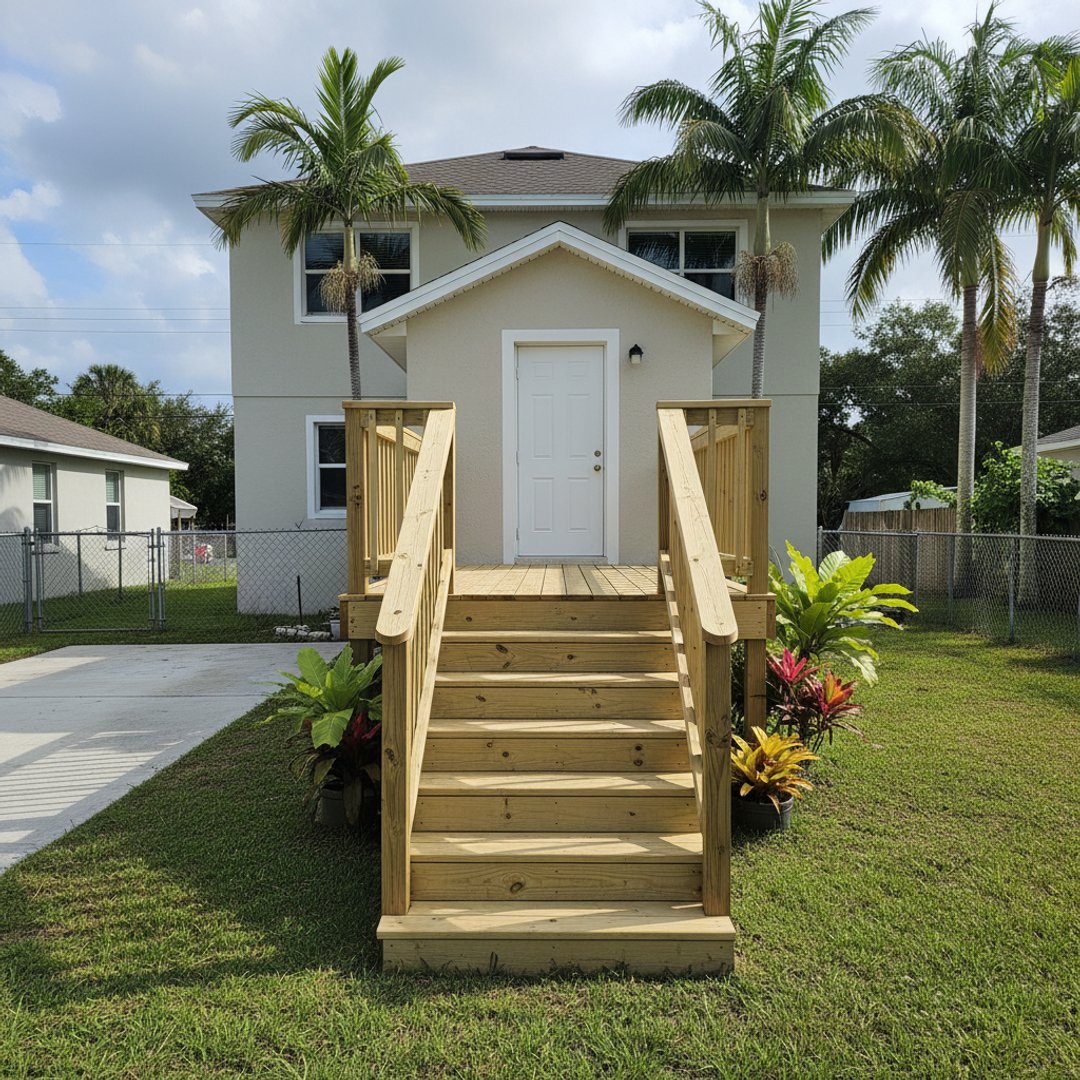
Nobody in Miami Gardens worries about frost heave or a slab cracking from a hard freeze. That's the one thing we don't have to think about. But South Florida trades a freeze-thaw problem for a rain-and-humidity problem, and if you time a deck build wrong here, it shows up in soft footings, mildewed wood, and stain that never really cures.
What the rainy season does to a build
From roughly June through October, Miami Gardens gets afternoon thunderstorms most days. They build fast off the heat and dump hard for thirty or forty minutes. That's a problem the second you open a footing hole. Sandy soil here drains fast, but the water table sits close to the surface in a lot of Miami Gardens lots, sometimes two to three feet down depending on the block. Dig a footing in August and you can be bailing water out of the hole before the concrete truck even shows up. Pour concrete into standing water or saturated sand and you get honeycombing and a footing that never reaches its design strength.
Framing lumber has the same issue in a different way. Pressure-treated joists left stacked and uncovered during a wet week pick up moisture, and if you fasten them down wet, they shrink and twist as they dry, which opens gaps at the ledger and pulls fasteners. It's not dramatic. It just means a deck that's a little loose two years earlier than it should be.
Hurricane season changes the schedule, not just the weather
June 1 through November 30 is hurricane season, and it affects deck work beyond the obvious rain. Miami-Dade is still the strictest wind code jurisdiction in the country. A new deck attached to the house, a pergola, or a screened porch addition has to meet wind load requirements, and the materials used often need a Florida product approval or Notice of Acceptance number on file. Permit reviewers check for that. Ordering lumber, hardware, or screen enclosure components in August and September, right when supply houses are also stocking up for storm prep, can add real delays to a project that would move faster in February.
There's also the practical risk of starting a structural project and having a named storm come through mid-build. A deck with footings poured but no framing, or framing up with no railing, isn't something you want sitting there with a tropical storm watch posted. We'd rather schedule around that window than rush a job into it.
Why November through April is the better window
Dry season in Miami Gardens runs roughly November to April. Rain drops off, humidity is lower, and you get long stretches of clear days in a row. That matters most for anything that needs to cure in open air. Concrete footings reach enough strength to build on in three to five days under good conditions, but full cure takes about 28 days, and that process goes cleaner without daily rain soaking the forms. Stain and sealant are even more sensitive. Most exterior deck sealants need 48 to 72 hours of dry weather to cure properly. Try to stain a deck in July with a storm rolling through by 3pm most afternoons, and you're basically applying product that never fully sets before it gets rained on.
Dry season is also when most other homeowners want work done, so expect lead times to stretch and crews to be busier. If your deck doesn't involve wet concrete or wet stain, like a railing repair or a resurfacing job using composite boards that are already kiln-dried, you have more flexibility to schedule in the off months and get on a calendar faster.
Not every job cares about the season the same way
Composite decking installation is less weather-sensitive than wood. The boards don't need to dry out before fastening, but they do expand and contract with heat, and Miami Gardens summer surface temperatures on dark composite can get uncomfortably hot to walk on barefoot. That's a comfort issue, not a structural one, but it's worth knowing before you pick a color in August and regret it by July.
Deck waterproofing and under-deck drainage systems are better installed in dry season for the same reason as staining. You're applying membrane or coating that needs to set before the first real rain tests it. Pergolas and shade structures are mostly weather-flexible once the footings are in, since there's no large deck surface curing underneath them. Screened-in additions need a dry stretch for the framing and screen install, but the bigger driver there is usually the permit timeline, not the weather.
Permits and inspections don't slow down for the season
Deck permits in Miami Gardens go through the city's building department, or Miami-Dade County directly depending on the scope and location of the property. Expect a footing inspection before concrete gets poured, a framing inspection before decking goes down, and a final inspection before the deck is considered closed out. If the deck is attached to the house, the ledger connection gets specific attention, since that's the failure point inspectors and engineers worry about most in a storm. None of that process moves faster or slower based on the season, so if you're trying to get a deck finished before a specific date, the permit review time matters as much as the weather window.
If you're planning a deck for Miami Gardens or one of the surrounding towns, dry season gives you the easiest build and the best cure conditions, but it's not the only time work can get done well. Majestic Deck Solutions schedules concrete and finishing work around what the weather's actually doing, not just the calendar.