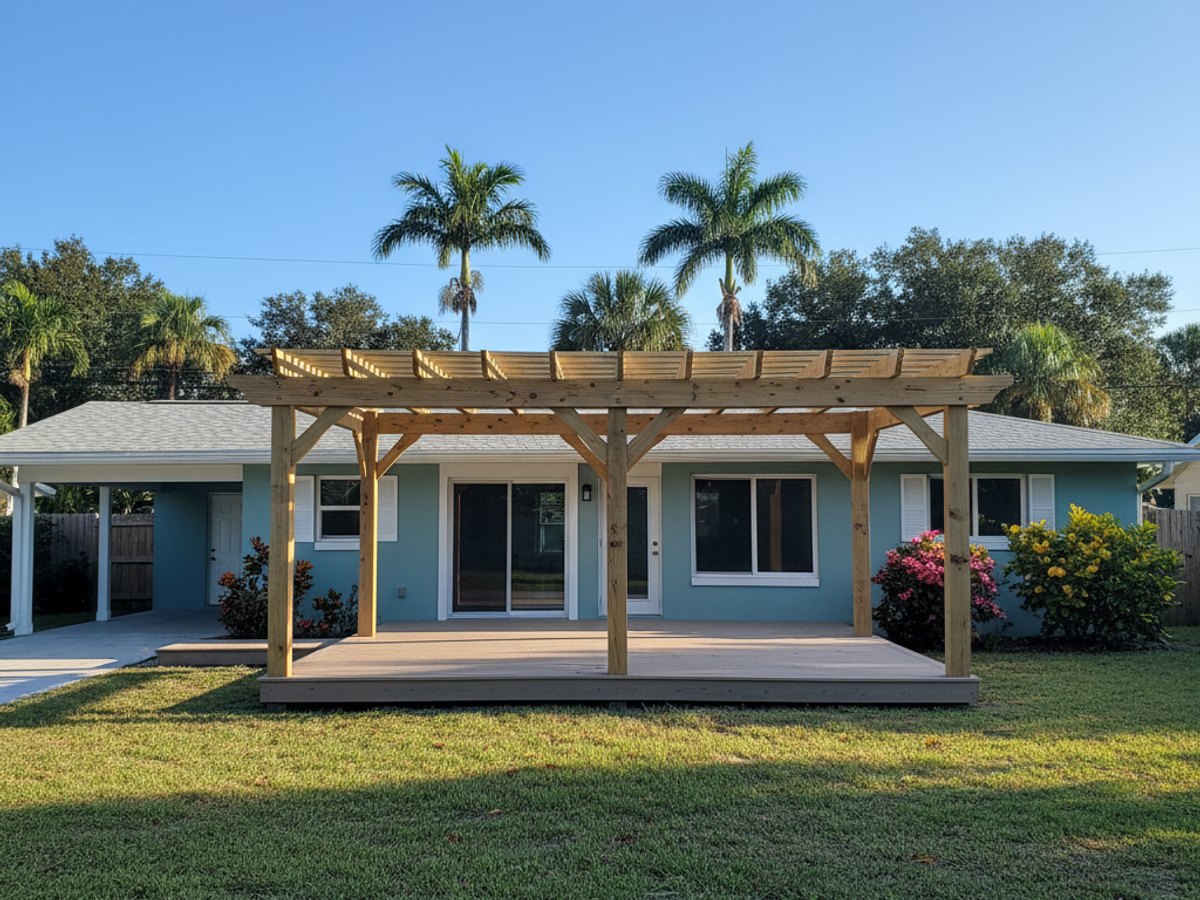
A deck in Miami Gardens has to deal with things a deck in Ohio never will. Limestone a foot under the grass instead of clay. A hurricane code that changed everything about how railings and ledger boards get attached. Rain that shows up most afternoons from June through October and doesn't bother asking permission. Before you sign a contract or pour a footing, these are the ten things worth looking at.
What's actually under your yard
Most of South Florida sits on oolitic limestone, and in a lot of Miami Gardens lots it's close to the surface, sometimes a foot or two down under a thin layer of sandy fill. That changes how footings get set. You can't always auger a clean 36-inch hole the way you could in deep soil up north. Sometimes it's a smaller footing bearing on rock, sometimes it's a spread footing because digging deeper means breaking through bedrock with equipment that costs more than the footing itself. A contractor who's worked here knows which lots are going to fight back before the first hole gets dug.
Termites are the other thing living in that ground. Subterranean termites and, in pockets of South Florida, Formosan termites, which eat faster and build bigger colonies. Any wood touching or near the ground needs to be rated for ground contact, not just the standard pressure-treated lumber sold for above-ground framing. If a builder can't tell you the difference between .25 and .40 retention treated lumber without looking it up, that's worth noting.
The wind code Miami-Dade takes more seriously than most of the country
Miami-Dade County is inside the High-Velocity Hurricane Zone, a stricter set of building code requirements that came out of Hurricane Andrew in 1992. It affects decks directly. Guardrails over 30 inches need to resist a specific lateral load, and the connection hardware, joist hangers, post bases, hurricane ties, often needs a Notice of Acceptance on file, not just a manufacturer's sticker. A deck built to a generic national code and a deck built to meet HVHZ requirements can look identical and still not pass inspection here.
The ledger board, the piece that bolts the deck to the house, matters just as much. A lot of Miami Gardens homes are concrete block with stucco, built from the 1960s through the 1980s, and that's a different attachment method than a wood-framed house. Lag bolts into block need the right anchor, flashed correctly so wind-driven rain during a tropical storm doesn't track behind the stucco and sit there. A loose or poorly flashed ledger is one of the most common things an inspector flags.
Fasteners, and what humidity does to the wrong ones
Standard zinc-coated screws will streak and corrode within a year or two in this climate, sometimes faster if the lot is within a few miles of the bay. Stainless steel or hot-dip galvanized hardware costs more up front and it's worth it. You'll see the difference in black streaking down composite boards and rust bleeding out of screw heads on wood decks that are only three or four years old. Ask what grade of fastener is actually going into the quote, not just what the decking material is.
Water, two different problems
The first is drainage around the house. A lot of yards in older Miami Gardens neighborhoods grade flat or even slightly toward the foundation, and a new deck footprint can make that worse if nobody checks the slope first. Heavy summer downpours here aren't gentle, an inch of rain in thirty minutes is normal in August. Under-deck drainage, a sloped membrane and gutter system tucked under an elevated deck, keeps that water moving away instead of pooling under the house or soaking the posts.
The second is flood zone status. Parts of Miami Gardens sit in a FEMA flood zone, and if yours does, there are rules about how low a structure can sit and sometimes requirements around flood vents near the foundation. This gets checked against an elevation certificate, not guessed at, and it's worth confirming before design starts rather than after the permit gets kicked back.
Paperwork before the shovel comes out
Permits for deck work in Miami Gardens go through the city's building department, and Miami-Dade County handles some of the product approval requirements layered on top because of the HVHZ rules mentioned above. A survey is usually part of the file, especially to confirm setbacks. Rear and side setback distances vary by zoning and lot, but a deck that sits too close to the property line is one of the more common reasons a permit gets delayed. Inspections typically happen at the footing stage, before decking goes down, and again at final, checking railing height, guard spacing, and that the hardware matches what was approved on paper.
If the house is in a newer subdivision, there's a decent chance there's an HOA with its own architectural review, on top of the city process. Older neighborhoods, the ones built out in the 60s and 70s, usually don't have that layer. Worth a phone call either way before you fall in love with a design.
What the sun does to the finish
South Florida gets strong, direct UV almost all year, not just in summer. A wood deck that would need restaining every three years in a cooler climate often needs it every twelve to eighteen months here, especially on a south or west-facing deck with no shade structure over it. Composite decking fades less dramatically but it does fade, and darker colors run hotter underfoot in July than you'd expect. None of this is a reason to avoid wood or dark composite, it's just something to plan the maintenance schedule around instead of being surprised by it two summers in.
Most of this comes down to the same idea: a deck built here has to answer to the ground, the water table, and the wind code all at once, not just look good in a rendering. We walk through all ten of these on every job we quote, and you can see the kind of work this covers on our deck builder work page before you decide who gets the contract.